THE THEATRE OF KNOWLEDGE: a postmodern relic. Barcelona, 2025.
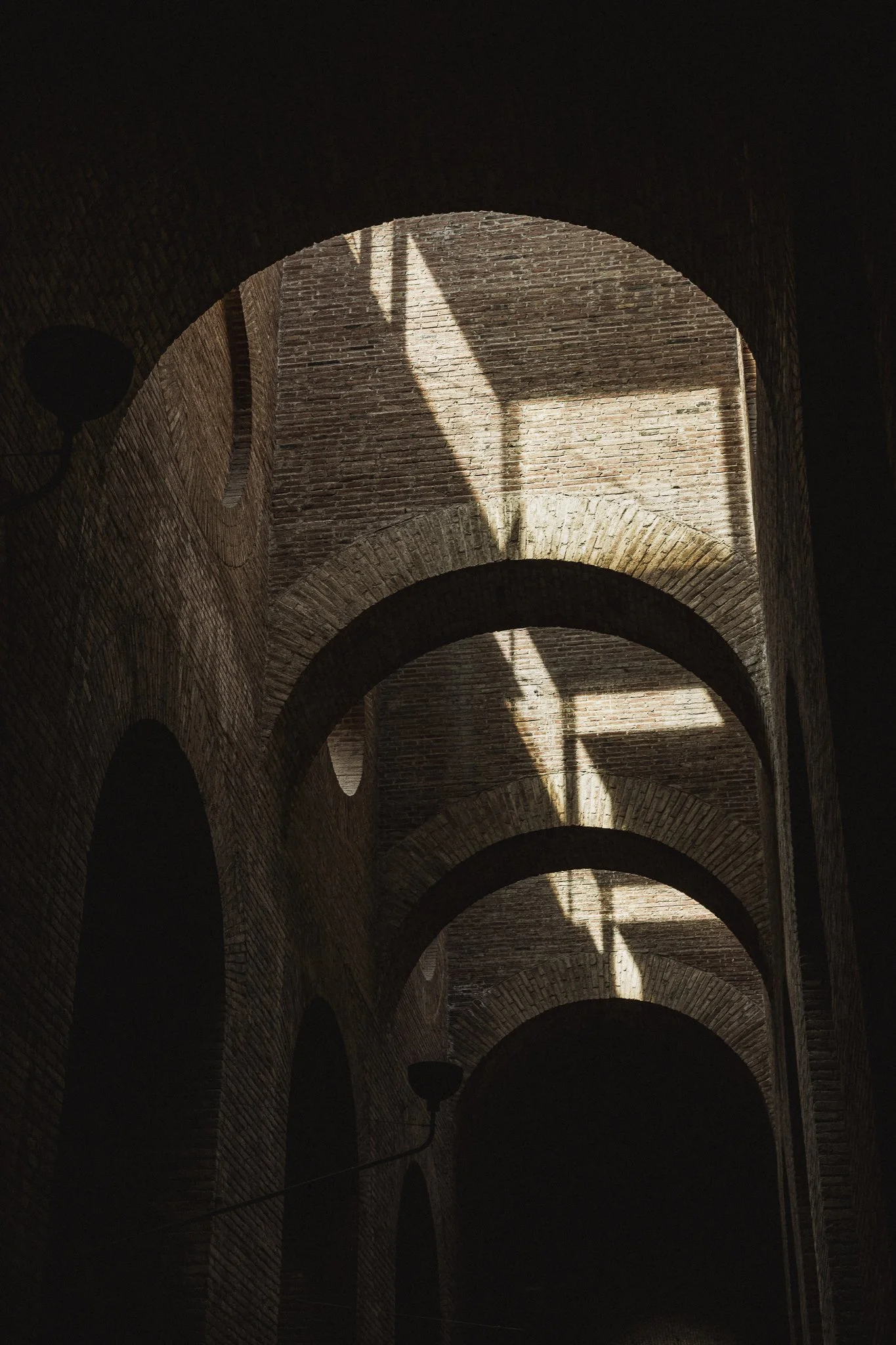
Repeating arches recede into darkness, a hard diagonal slash of light cutting across the brick.
The Cisterna de les Aigues was built to hold water. The arches that rise above you – neo-Romanesque, excessive, beautiful – were engineered for containment. Not for thought. Not for people. For pressure and volume and the practical business of supplying a city.
Someone decided to fill it with books instead.
That decision interests me more than the architecture.
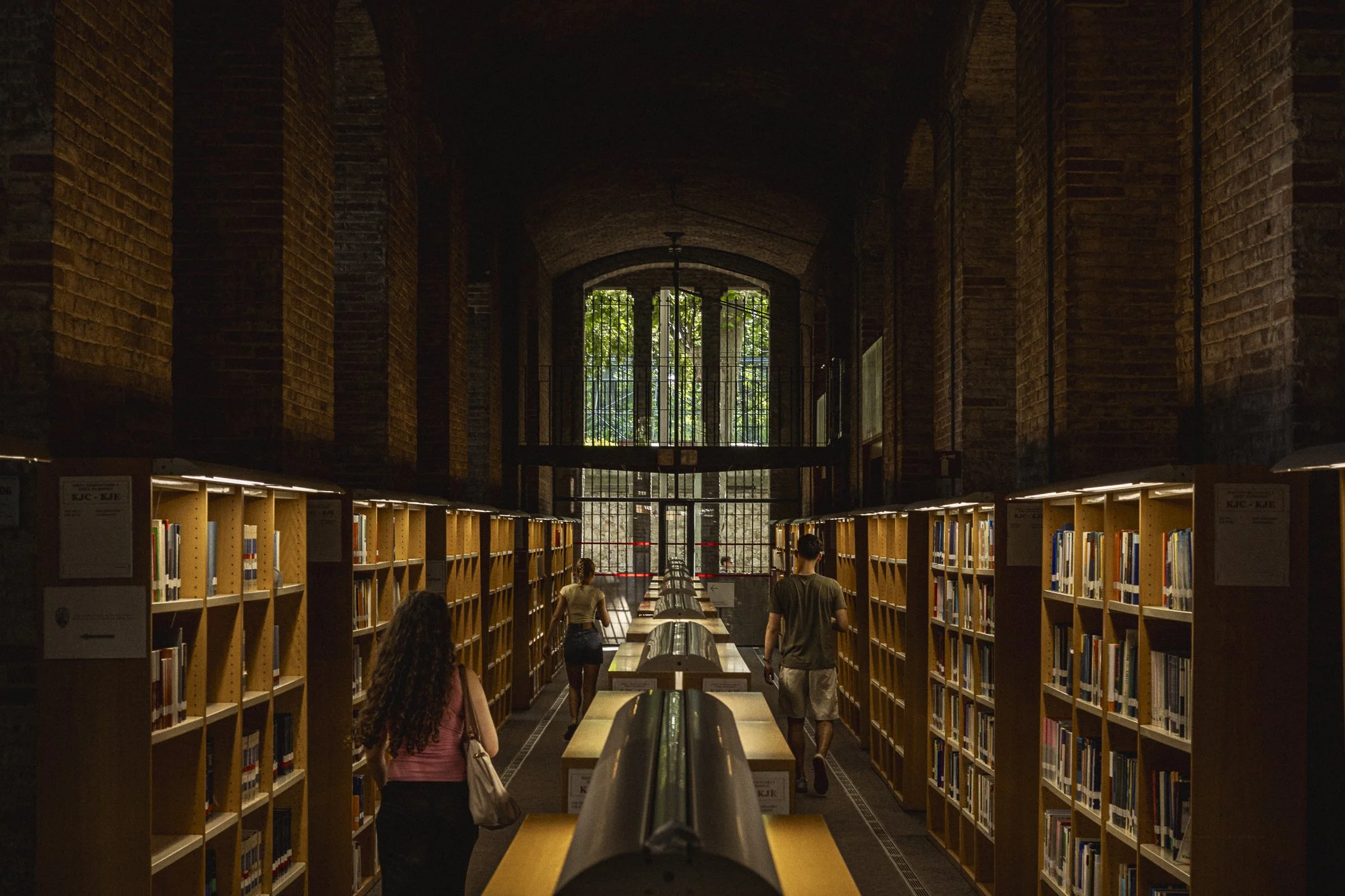
Three figures walk away from camera down the central aisle of the Cisterna.
I went there with a camera and the intention of photographing space. Light through brick. Shadow through arch. The kind of frame that looks serious and says nothing.
I lasted about ten minutes.
I am a humanist. I find architecture without people unconvincing, like a stage with no play running. Beautiful in the way an empty theatre is beautiful. Which is to say: beautiful, but waiting. Always waiting.
So I started watching the people instead.
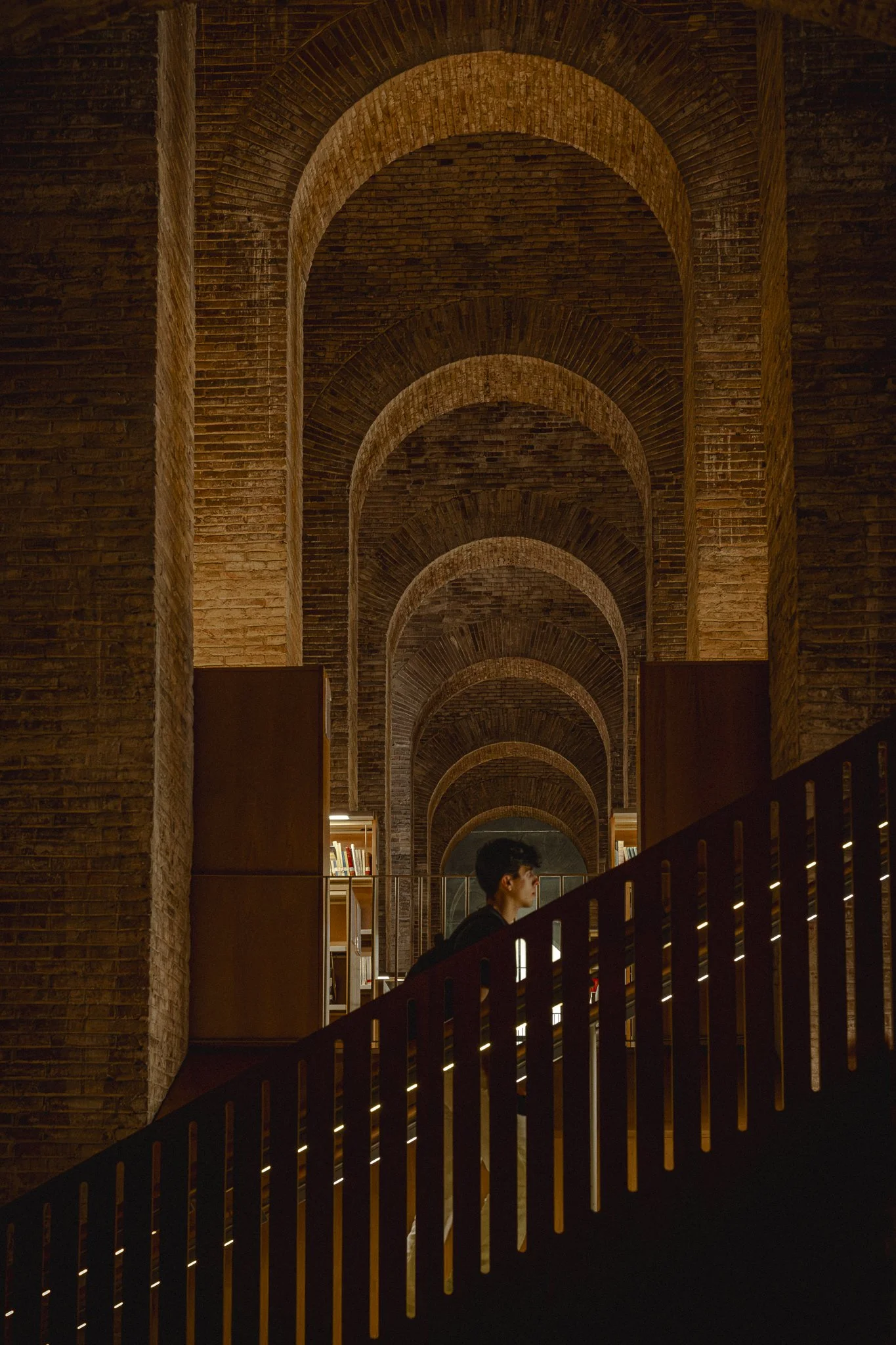
Single figure, profile.
It was exam season. The long tables were full. Young people – not my age, a few years younger – bent over notebooks and laptops, preparing to demonstrate that knowledge had momentarily passed through them.
I recognised the anxiety. The particular quality of attention that is not really attention but performance of attention. The face arranged to look like it is absorbing something.
What I noticed, and this I had not expected, were the books.
Specifically: that nobody was touching them.
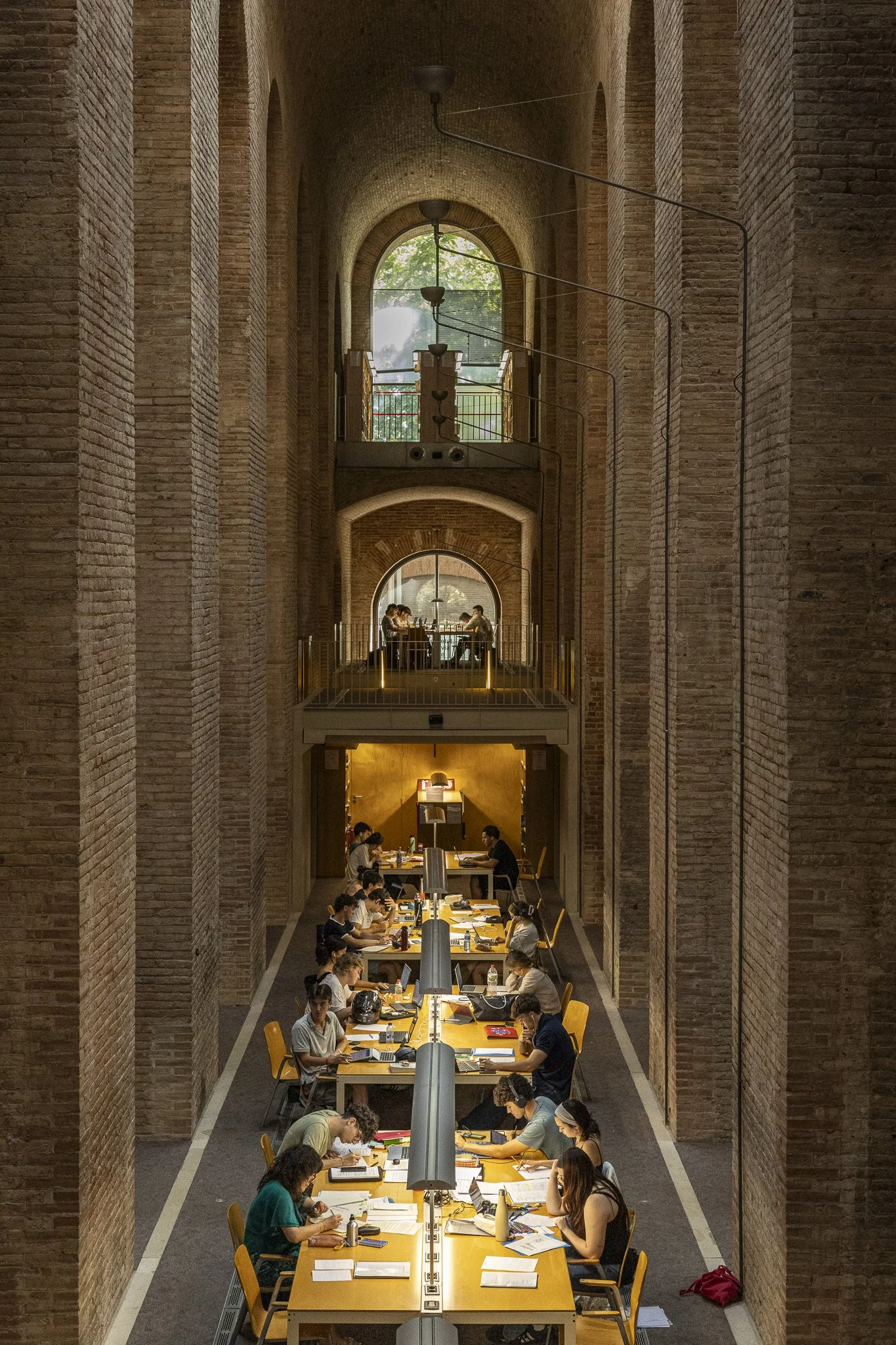
Students at long lit tables in two rows, books and laptops in front of them.
The shelves run the length of the space. Languages. Literature. Mathematics. Economics. Finance. Decades of accumulated thought, catalogued and spine-outward, available to anyone who wants them.
Nobody wanted them.
Every person in that room held a phone or faced a screen. The books stood behind them like furniture. Like wallpaper. Like the architectural detail of a space that has been repurposed without anyone quite admitting what was lost in the repurposing.
I am not making a generational argument. I am not claiming that something is wrong with these students or this generation or this moment. I am saying something simpler.
The books are no longer the point. The space is no longer the point. The point, if there is one, floats somewhere between the screen and the deadline and the summer that waits on the other side of the exam.
Knowledge, like water, finds its own level. It moves to where it is easiest to reach.
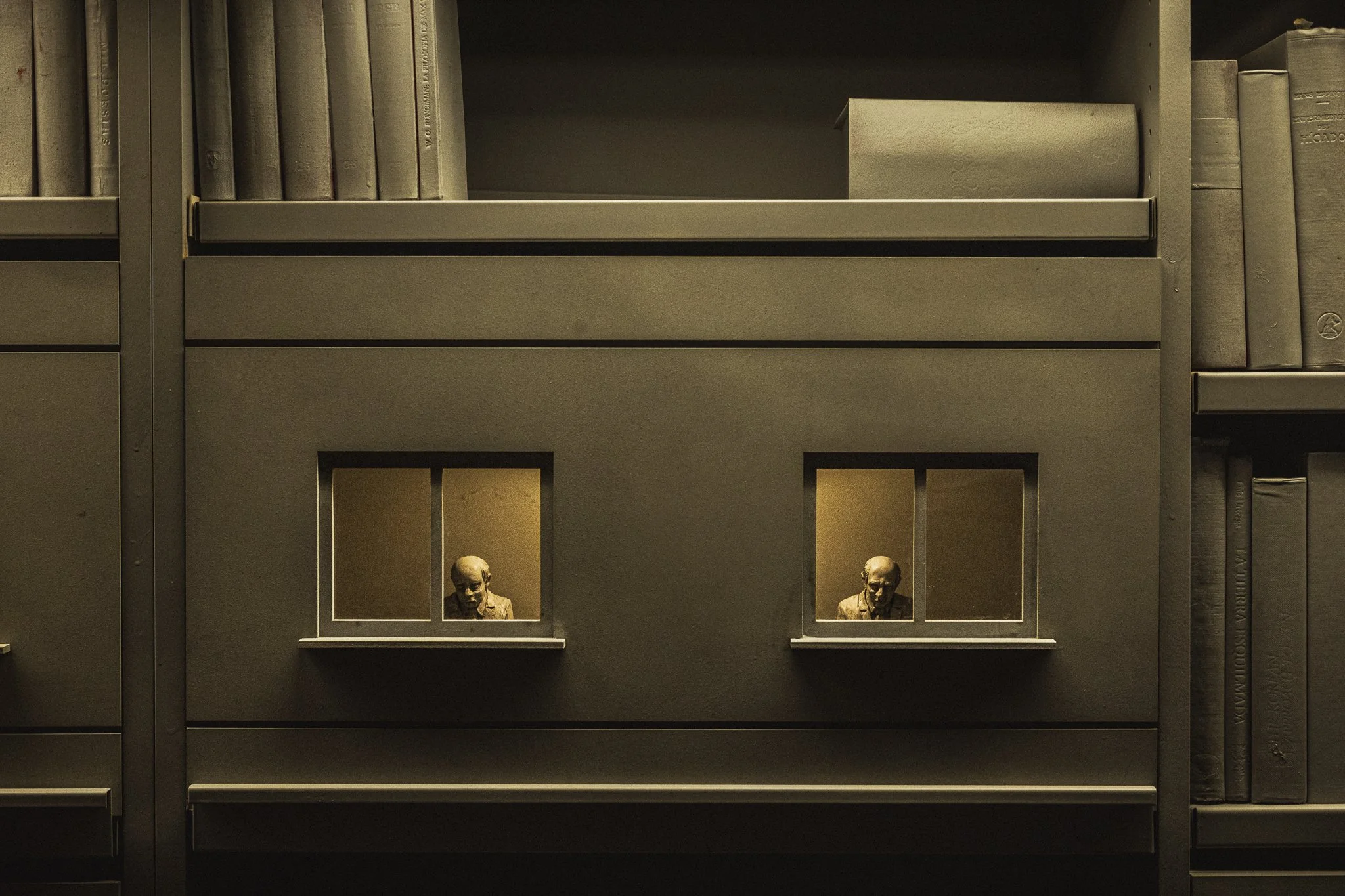
Two stone busts installed in recessed niches within the shelving, surrounded by old books on either side.
There are two stone busts installed in the shelving. They peer out from between the books at the people who do not look back at them. They have been there, presumably, for decades. They will be there after the books are gone, if the books go.
They are the only ones in the room paying attention to what is on the shelves.
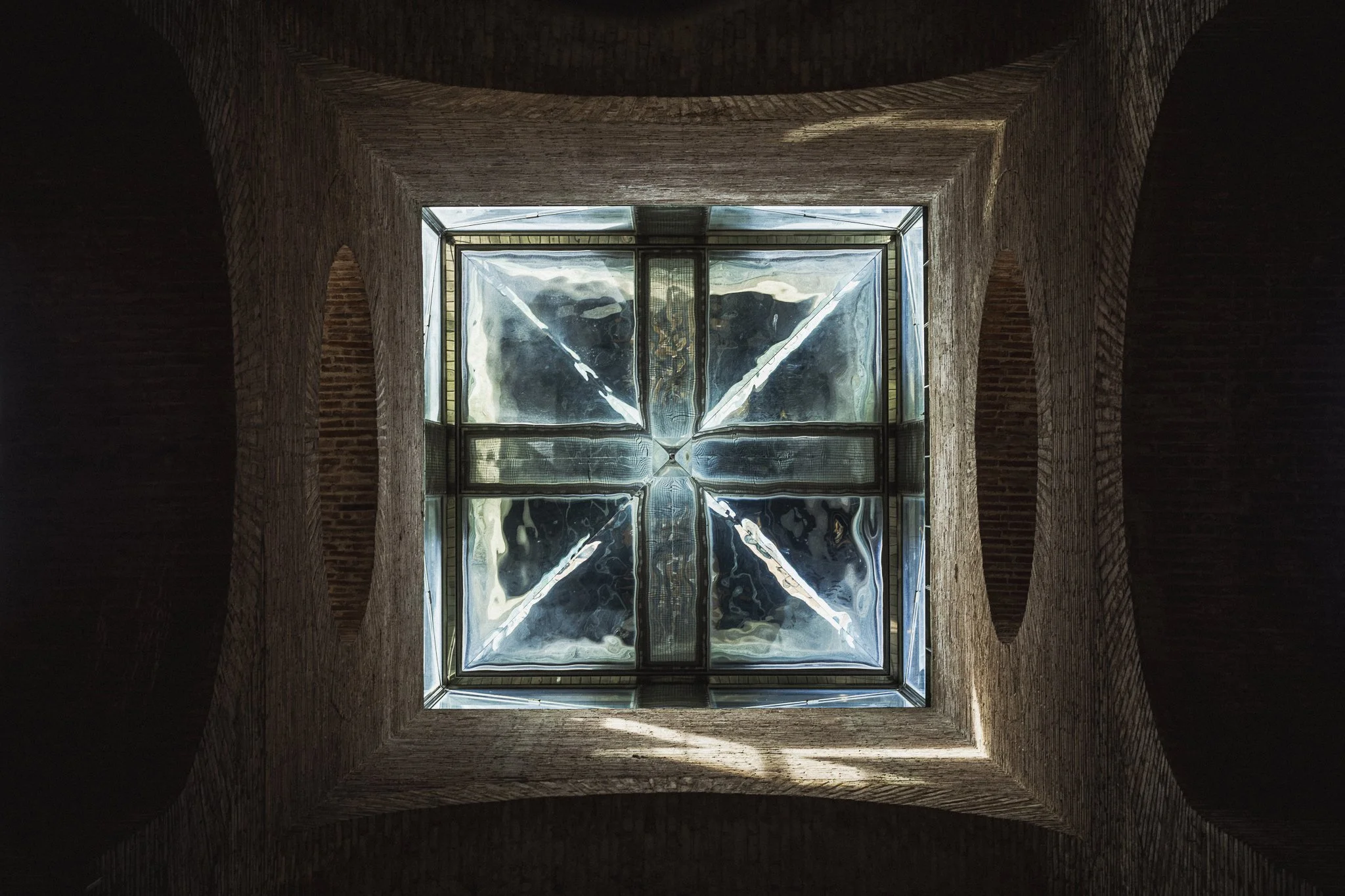
Looking straight up. A square glass skylight set into the brick ceiling.
The Cisterna was designed to hold something that could not be held forever. Water moves. It evaporates. It finds cracks.
So does knowledge, apparently.
What remains is the container. Which is magnificent. Which was built for something else. Which now holds people who are connected, at all times, to more information than any library has ever housed. People who sit inside these walls because the walls are beautiful, because the light is good, and because there is something in the human animal that still wants to be inside a space that feels serious.
That instinct is worth something.
The sociologist Ray Oldenburg called them third places, spaces that are neither home nor work, where people gather simply to be among other people. The library was one. The café was another. The public square. Spaces with no transaction required beyond presence.
We are losing them. Not because they close, the Cisterna is open, full, functioning. But because what happens inside them has quietly changed. The space remains. The use of it has been hollowed out and refilled with something that looks similar but is not the same.
That is how these things always end: not with an announcement, but with the moment you reach for your camera because something in you already knows. The instinct arrives before the thought. You raise it to your eye and only then understand what you were trying to hold onto. A little nostalgia dressed as a photograph. A little photograph dressed as memory.
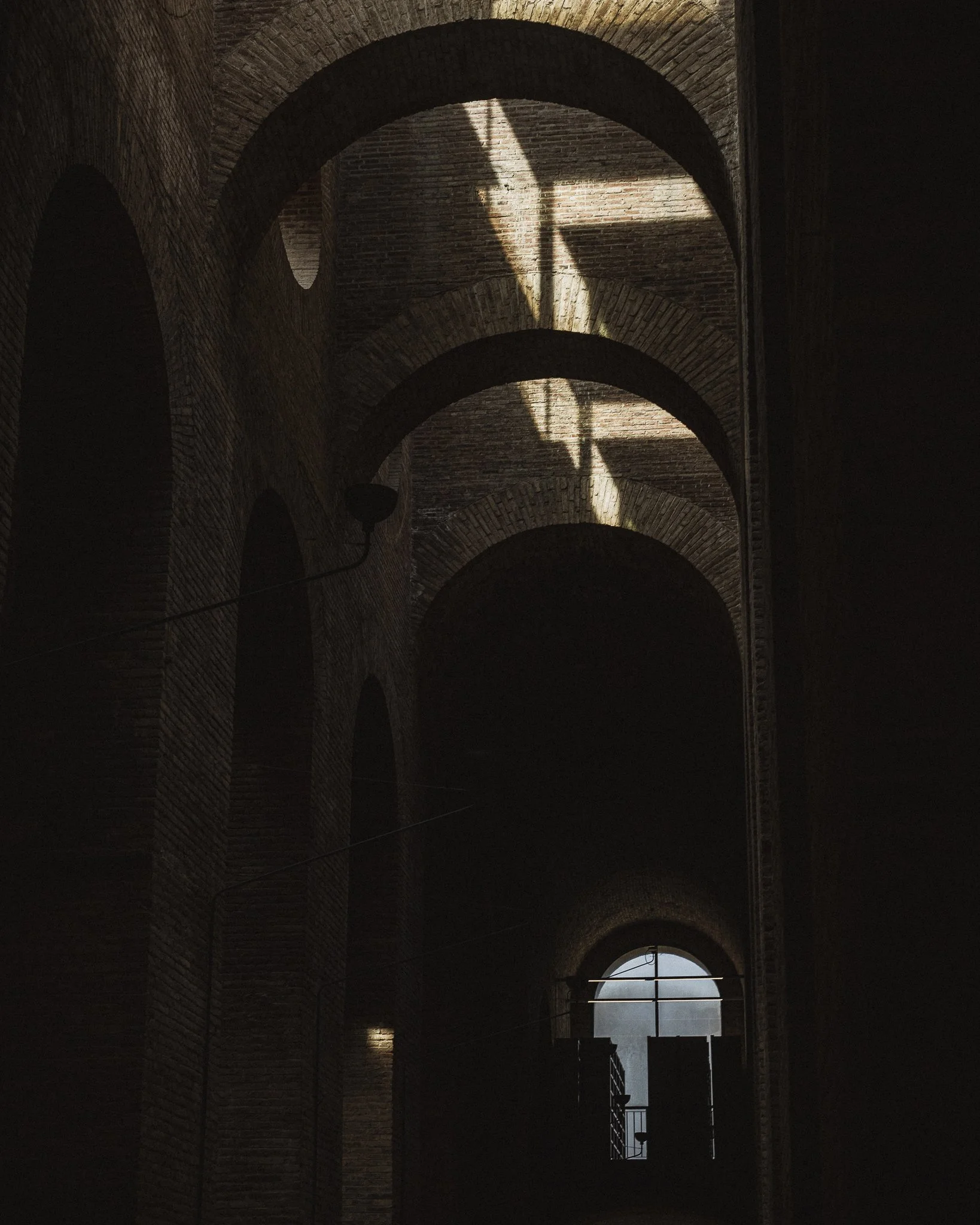
Arches into Darkness.
Photographs and text: Bruno Bertini, Barcelona, 2025. Cisterna de les Aigues, Ciutadella Campus, Universitat Pompeu Fabra.