The Wall and the Cross: Is Antisemitism Hiding Behind the Criticism of Israel?
‘The wall and the cross’: when criticism becomes a mirror
There is a wall in a church in Barceloneta. On that wall, beneath the feet of a crucified Christ, someone has written "ISRAEL GENOCIDA" – "Israel is a genocide perpetrator" Further down, in the same urgent handwriting of someone leaving a message to God, it says "Que Paco llegue en 1 División" – "May Paco make it to the First Division".
Same wall. Same act of faith in the power of words.
This is the image that made me think about what we are living through.
The socially acceptable form
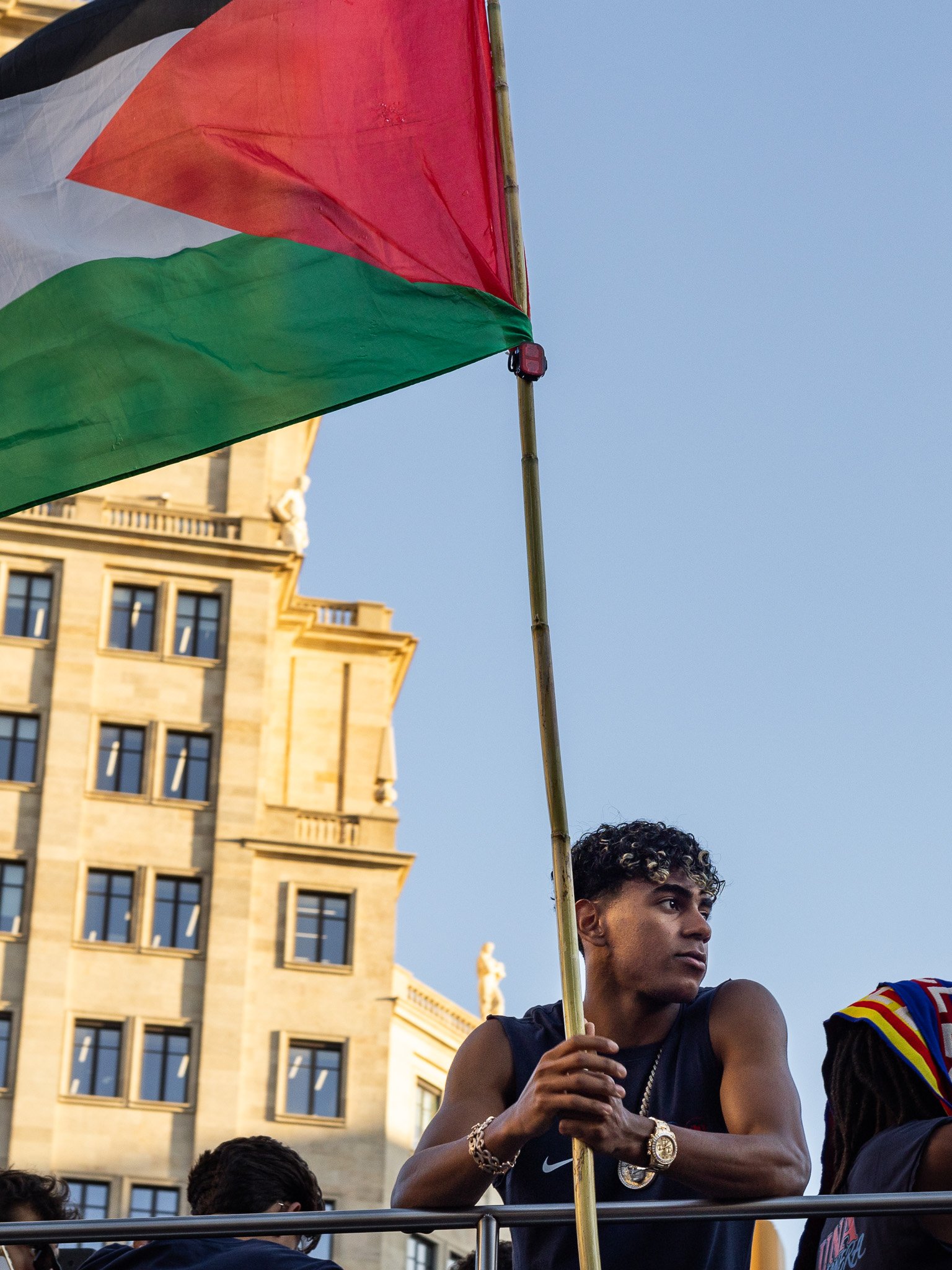
Lamine Yamal, Passeig de Gracia, Barcelona. 2025. Barça title celebrations.
I witnessed it firsthand.
In 2025, at the Mardi Grass parade in Nimbin, Australia, a Palestinian flag was carried through the procession. Then a voice from the crowd shouted, "F**k the Israeli bitch" — directed at a woman whose only visible fault was being Israeli. She was a hippie living in the same commune. Doubtfully a Netanyahu supporter. The altercation that followed pulled in more voices, more slurs, none of them useful, all of them directed at a person rather than a position.
Same logic, different year: at the outbreak of Covid, Chinese people were physically attacked in Dublin and elsewhere. Italians — the first Western country to face a major outbreak — were side-eyed across Europe. The threat gets a face. The face gets a nationality. The nationality becomes the accusation.
This is the mechanism. And Gaza gave it a new permission slip.
Since October 7th 2023, something has shifted. Not in people's positions, those were already there, but in the social licence to express them. The war in Gaza offered a framework inside which latent antisemitism found a new grammar: no longer "the Jews," but "Israel." No longer racism, but geopolitics.
I am not saying that criticising Israel is antisemitism. It isn't. But I am saying that some of this criticism has a structure, an intensity, and a selectivity that politics alone cannot explain.
The asymmetric weight
There is a detail I notice every time I watch the Italian news: when a crime is committed, the nationality of the offender is mentioned, or emphasised, in inverse proportion to their belonging to the majority group. If the offender is Italian, the fact is the fact. If they are foreign, the nationality becomes the story.
This is not a coincidence. It is a precise psychological mechanism, applied systematically to minorities: a good act by a member of a group perceived as "other" barely closes the gap. A negative act carries a perceived weight far beyond the act itself and falls on the entire group.
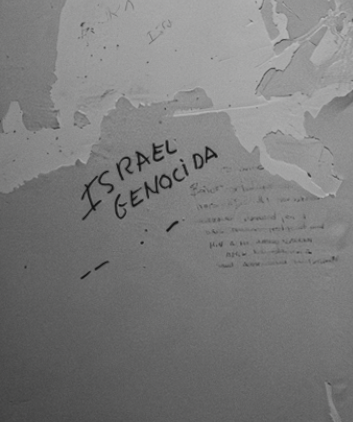
Church of Barceloneta, Barcelona. 2026. Detail.
This ethnocentric mechanism is everywhere. But in the Jewish case it has one unique characteristic: it has been sedimentated by two thousand years of theology. This is not recent prejudice, it is structure.
Deicide didn't die in 1965
The Second Vatican Council formally abandoned the doctrine of collective Jewish responsibility for the death of Christ. It carries legal weight in Catholic doctrine. But doctrines change with a document. Collective consciences do not.
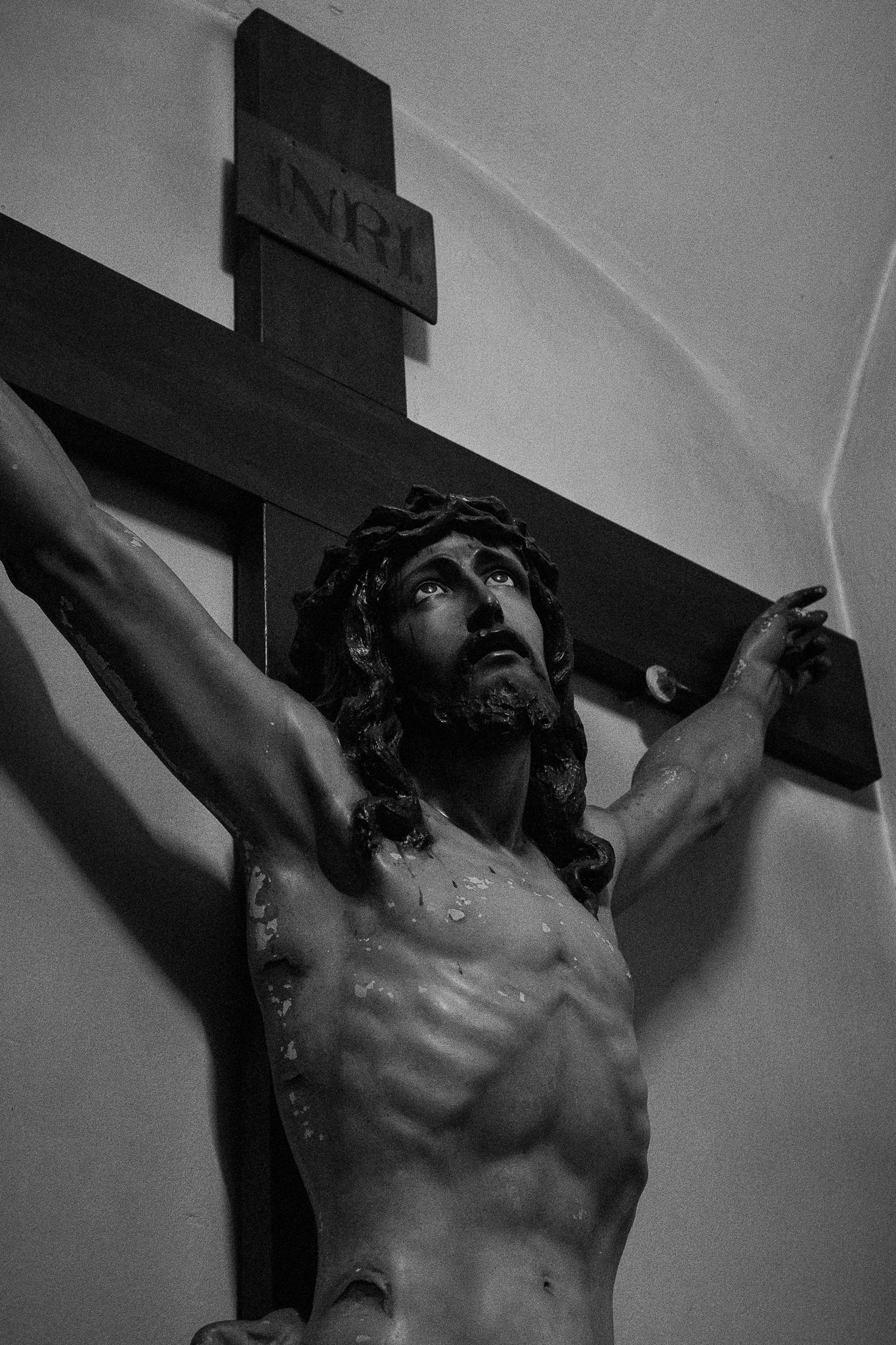
Church of Barceloneta, Barcelona. 2026. Detail.
The image I photographed says this without intending to: accusations written beneath the feet of the crucified Christ. It is not a composition, it is what was on the wall. And that visual structure, the accused beneath the divine judge, is exactly the narrative structure of deicide. It is worth remembering that Christ himself was Jewish. By religion and by belonging.
Dusted off. Not invented.
Why Israel and not Netanyahu? Why Palestine and not Hamas?
This is the question that disturbs me most.
Trump separated families at borders and authorised strikes on Iranian territory. Putin bombed hospitals and deployed North Korean soldiers on European soil. Both lead states that have committed, and continue to commit, documented atrocities. Yet I rarely hear them named with the same collective intensity with which Israel is named. Rarely do I see their states, not just them as individuals, identified as direct aggressors with the same automatism.
Why?
One answer is geopolitical: Israel is a more visible conflict, more media-saturated, with more immediate images. That answer is partially true.
The other answer is more uncomfortable: Trump and Putin do not carry the weight of a millennial narrative. They are not the descendants of the "killers of Christ." They are not the minority that crossed Europe for centuries as a foreign body, as a scapegoat, as a mirror onto which collective guilt was projected.
Israel is. And that psychological structure does not disappear just because the criticism has become political instead of religious.
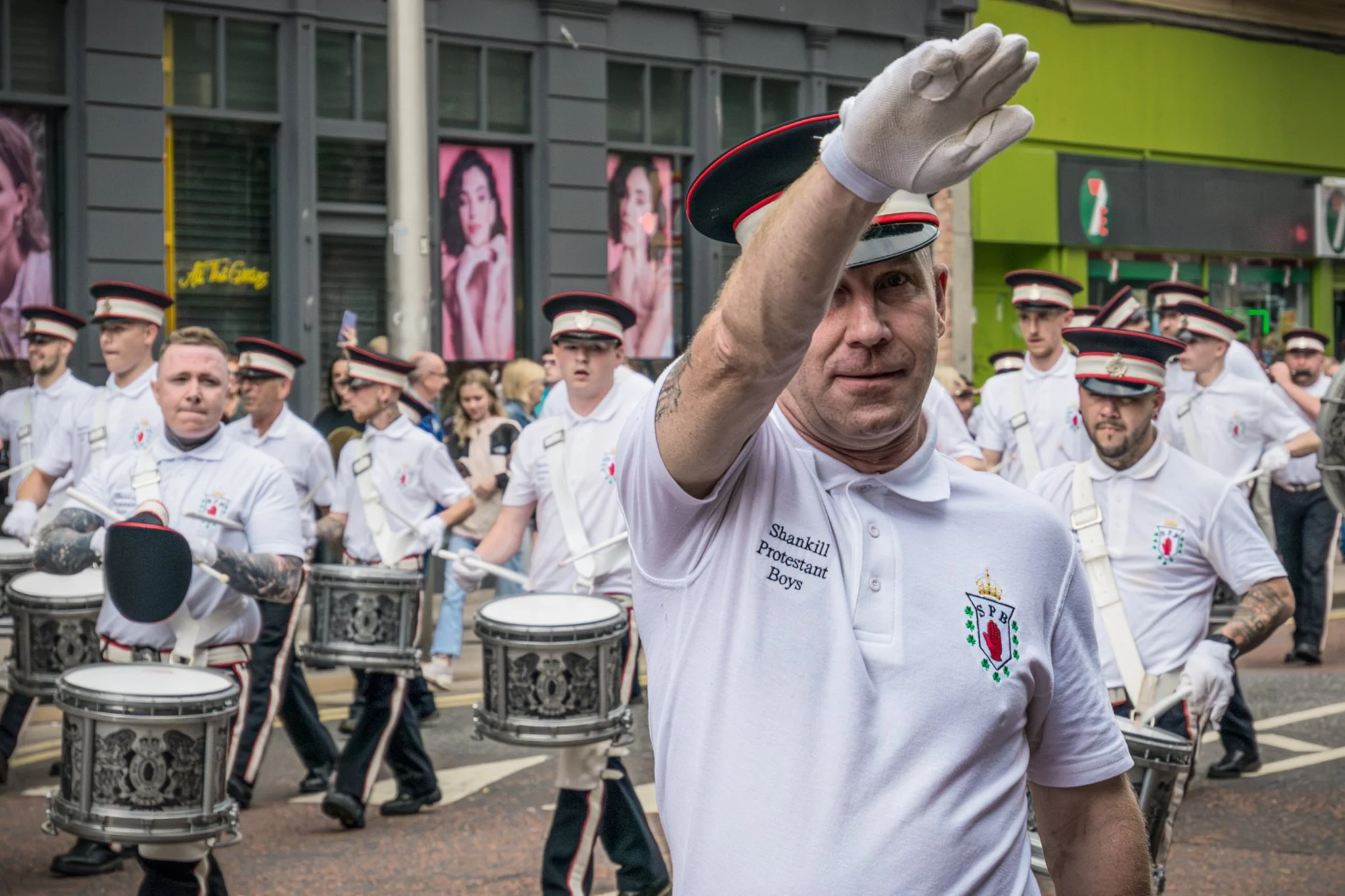
Shankill Protestant Boys — religion and political identity colliding.
The bad guy in Hollywood movies during the Cold War always had a Russian accent. Top Gun 2 featured Iran — you can gasp now. Prejudice doesn't disappear. It finds a new costume.
The greatest disbelief
What surprises me most, and what I find historically almost impossible to process, is that the state which survived the most documented industrial extermination in modern history is today accused of perpetrating something similar.
I am not saying Israel is innocent. I am not saying Gaza is not a real and documented human tragedy. I am raising a question of narrative structure: how is it possible that the cycle repeats? How is it possible that the motivations – ethnic purity, exclusive right to a land, the dehumanisation of the other, found fertile ground precisely there?

Choeung Ek memorial, Phnom Penh, Cambodia. Cambodian schoolchildren visit the Killing Tree — the tree against which the Khmer Rouge executed children during the genocide of 1975–1979. 2025.
It is the hardest question. And I have no answer. I have only the image of that wall.
I have no side
I am not writing this to defend Israel. I am not writing this to defend Hamas. I am writing this because I believe that looking at things without a predetermined position is the only way to understand anything.
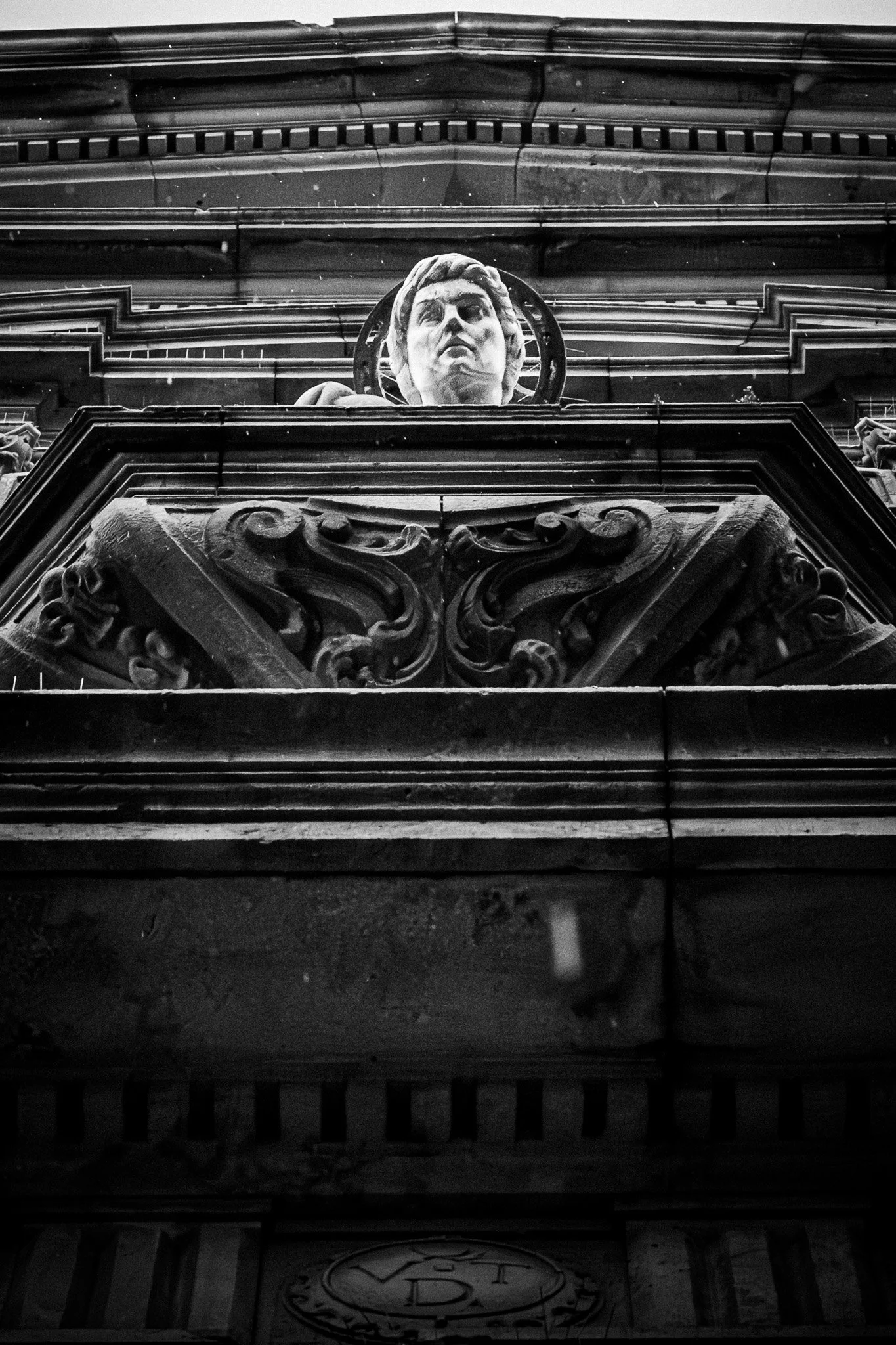
Barceloneta, Barcelona. 2026.
I have a wall. A camera. And a question I can't stop looking at.